
from the Not-So-Secret Writings of ScLoHo last week:
Before I tear into the marketing folks at Ruby Tuesday, I'll show you what I received in my email yesterday: You can click on the pic to make it bigger, if you need to.
1st off: Thumbs up to Ruby Tuesday for the clickable links that surround the coupon. They all worked seamlessly.
Next: Read the legal mumbo jumbo.
Why is this offer not available in Hawaii, Manhattan or Airports?
and Why is a Credit Card Payment required to redeem?
But what really got me going was the whole Screen Shot This Coupon On Your Mobile Device And Use All Month Long concept.
Do they mean take a picture with my phone and then show it to my server?
Because there is a much better way to incorporate mobile couponing.
You can use QR codes that I scan and then you can track my visits and the details.
You can use LBS, (Location Based Services) to check in and see if I take advantage of the 15% offer.
You can do so much more, Ruby Tuesday.
(In the name of research, I'm going to have to try this and see what happens when I visit.)
The words of Scott Howard aka ScLoHo
Monday, August 08, 2011
This isn't the best way...


Wednesday, July 20, 2011
Mobile Media Consumption

What if everything you have been doing for the past 40 years to advertise and market your business was outdated and stopped working?
This was a question I used to ask advertisers a few years ago when they saw the number of new leads shrink from the old stand-by, the newspaper.
I have circulation numbers for my two local newspapers for the past 8 years that shows how the decline in readership coincides with the decline in advertising and the increase in prices for both.
The other form of advertising that should be taking a hit soon is the phone book, if it hasn't already in your city.
But on the cusp of being outdated is the website that is not mobile optimized.
Check out this report I got from RAB.com:
35 Percent of American Adults Own a Smartphone
In its first stand-alone measure of smartphone ownership, the Pew Internet Project finds that one third of American adults -- 35% -- own smartphones. The Project's May survey found that 83% of US adults have a cell phone of some kind, and that 42% of them own a smartphone. That translates into 35% of all adults.
Our definition of a smartphone owner includes anyone who falls into either of the following two categories:
Several groups have higher than average levels of smartphone adoption, including:
Urban and suburban residents are roughly twice as likely to own a smartphone as those living in rural areas, and employment status is also strongly correlated with smartphone ownership.
Mobile phones are a main source of internet access for one-quarter of the smartphone population. Some 87% of smartphone owners access the internet or email on their handheld, including two-thirds (68%) who do so on a typical day. When asked what device they normally use to access the internet, 25% of smartphone owners say that they mostly go online using their phone, rather than with a computer. While many of these individuals have other sources of online access at home, roughly one third of these "cell mostly" internet users lack a high-speed home broadband connection.
Smartphone owners under the age of 30, non-white smartphone users, and smartphone owners with relatively low income and education levels are particularly likely to say that they mostly go online using their phones.
Phones operating on the Android platform are currently the most prevalent type of smartphone, followed by iPhones and Blackberry devices.
Demographically, Android phones are especially common among young adults and African-Americans, while iPhones and Blackberry devices are most prevalent among college graduates and the financially well-off.
(Source: Aaron Smith, Senior Research Specialist, Pew Research Center, 07/11/11. Complete report at http://www.pewinternet.org/~/media//Files/Reports/2011/PIP_Smartphones.pdf)
By the way, my company Cirrus ABS can create a mobile version of your site or perhaps optimize your current site for those mobile visitors.
Call or email me: 260-255-HELP or SHoward@CirrusABS.com
Sunday, July 17, 2011
QR-ing it
QR Codes are one of those pieces of tech that marketers are still trying to figure out.
Check out this article from Drew:
Beverage start up counts on QR codes
Posted: 23 Jun 2011 06:49 AM PDT

Will we start to see QR codes on pkg goods?
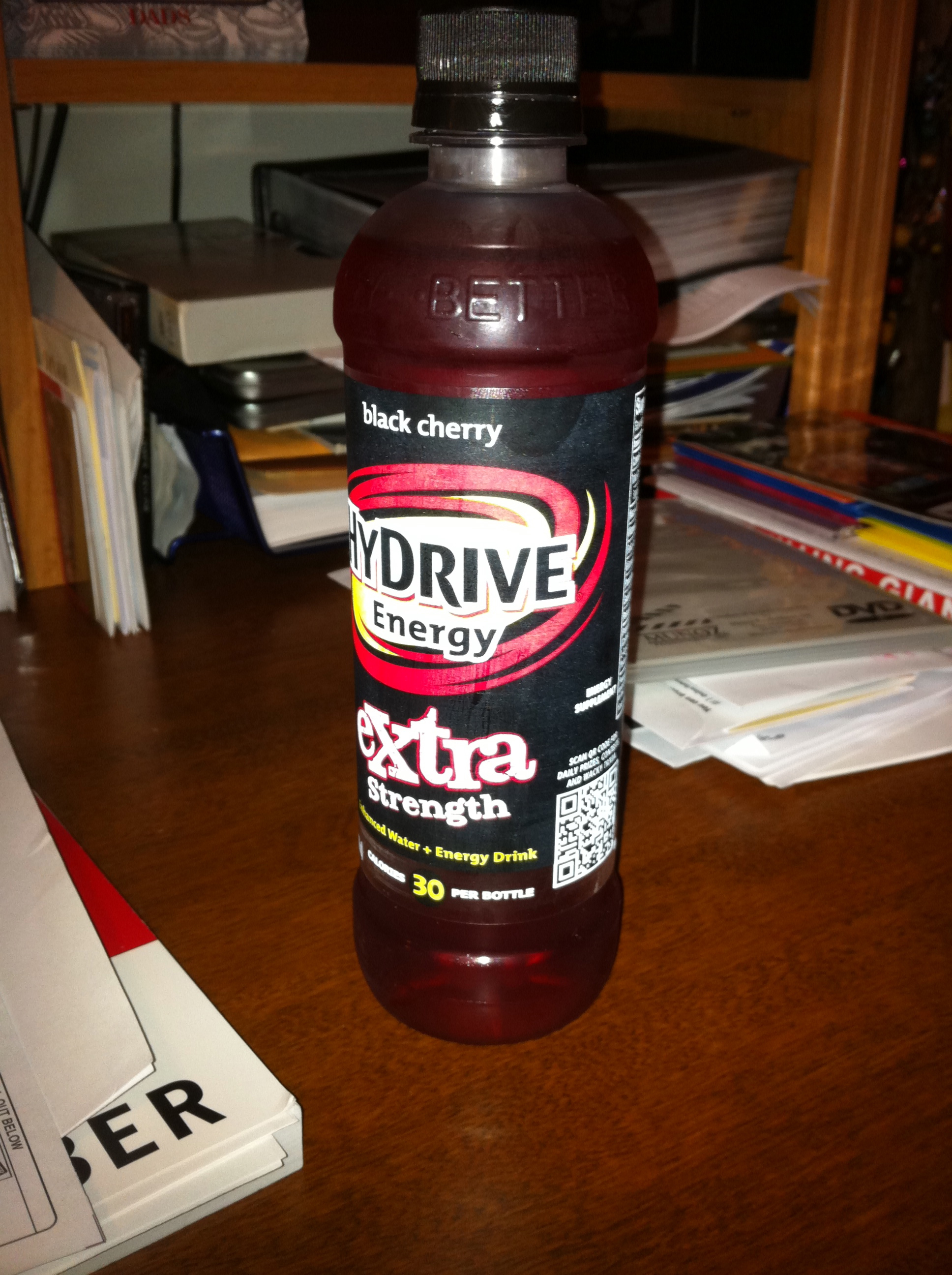
Starts ups are tough…especially consumer goods start ups. In the crowded energy drink space, you have to be pretty innovative to push beyond getting someone’s attention and converting that to a purchase.
So HYDRIVE Energy, the maker of upstart HYDRIVE Enhanced Water Energy Drinks, decided to try something different. On two of their products – decal and extra strength, they’ve added a QR code.
When scanned, the QR codes take consumers to a mobile site offering a constantly changing array of wacky fitness trivia, contests, free prizes and product information.
They worked with a group of digital marketing students at Harvard Business School to create a QR code strategy for the brand. One of the things that makes this campaign unique is that when you scan the code, you’re delivered to the site which delivers fresh and varied content each time.
By offering different content with each scan, they’ve replicated the “under-the-cap” promotional experience often used in traditional soft drink marketing but in a digital way. According to HYDRIVE’s director of marketing, their goal is to create a more interactive and intimate relationship with our product.
The HYDRIVE QR site features four sections; a changing daily trivia fact or a free prize; a monthly sweepstakes; a link to product information; and a link to Facebook. The social media component is an important strategic initiative for HYDRIVE as they continue to build it out.
You can check it out by finding the nearest location to buy a HYDRIVE Energy here or just click here to go right to the site.
What do you think — good use of QR codes?
Sphere: Related ContentSaturday, June 25, 2011
Tiny Screens

Optimizing for Mobile.
Ever hear that?
There are a couple ways to do it...
Marketers Need Mobile Sites -- But Make Them Truly Mobile Consumers who use smartphones to shop or visit brand Web sites are time-constrained, attention-compromised, and trying to engage a brand on a tiny screen. And there are lots of them, so ignore them at your own risk.
Kari Wilson, product marketing manager, Google Mobile Ads, and Sebastien Chalmeton, vice president, mobile strategy, Phonevalley, raised those points recently at the OMMA Mobile conference in New York.
Chalmeton said that advertisers without mobile sites might as well be closed one day per week.
Wilson said 30% of people who shop for consumer electronics, 15% of finance seekers, and over 15% of insurance queries, are via mobile, but "we did a study where we looked at (the) top 1,000 advertisers and found 79% didn't have mobile optimized sites."
She said that's bad for business because 60% of consumers who have a bad mobile site experience will not go back to that site, 40% will go to a competitor's site, and 19% will have a negative perception of the brand.
Chalmeton cited five keys to creating mobilized sites. Keep the layout simple; prioritize content; use uniquely mobile features; design for thumbs not mice; and make it easy to convert consumers who have little time.
Keeping mobile sites simple "is the most critical thing you need to do when you design a mobile site," said Chalmeton, whose company has done mobile site optimization for companies like General Motors and LG.
"For Cadillac we tried to eliminate clutter as much as possible," he said. "You can view content at arms' length, and that's a rule of thumb." Also, he said, advertisers should make sure their mobile sites are focused on one piece of content at a time. "The consumer is on the go, so you can't do one-minute videos; 30 seconds is about right, because mobile sites are still slow."
Wilson said another simplification that aligns with behavior is making search easy and prominent: "For a lot of consumers, search is what they do with smartphones."
Chalmeton said one way to think about prioritizing content is to think of the three to five most important things for a mobile consumer and make those easy to find and do. Also, given the short attention span of the mobile user, he said that marketers should make mobile experiences transaction-based, not about browsing. And they should do things like using simple coding to make their mobile sites load as fast as possible, he added.
Also, Chalmeton continued, marketers need to think about what makes mobile unique, such as GPS, cameras, notepads and other utilities -- and that good mobile platforms drive consumers to retail and channel partners since the consumers are already likely to be out and about.
The final steps have to be smooth and simple, Chalmeton concluded, pointing to fairly easy mobile site features -- such as forms, click-to-call, and logins -- that can keep customers on track to purchase.
(Source: Marketing Daily, 06/07/11)
Tuesday, June 07, 2011
Mobile & Moms
 Update with a link below...
I've shared reports in the past about mobile, which in most cases is smart phones.
Even before the iPhone and Droid, I made the observation that a phone was going to be the lifeline that many people hang on to... I've seen homeless people with all of their possessions in a backpack who had a cellphone.
My step-daughter lost her phone for a few hours and said she lost her "life".
No, she's not homeless, in a few years she will become one of these Mobile Moms talked about in this report from Mediapost:
However, there are some apps that, after I loaded, set up accounts and organized my information; I wished I could apply for the time rebate. Complete wastes of the time that they were supposed to save me. My favorite "bad app" is for grocery shopping that I downloaded under the premise of "saving money and time." It seemed good on paper, easy to use, barcode scanner, price checker, calorie information. Easy and useful? Bah, humbug.
Here are my complaints in no particular order:
1. Don't offer me coupons for chains of stores that are not in my region of the country. I love Kroger and all, being from the Midwest, but we don't have this store in Boston. Has geo-targeting not come further, I mean I did spend all that time loading my personal information, including my address and zip code.
2. Don't make it harder that it needs to be. I usually can get in and out of the grocery store in under 30 minutes if it is not a busy shopping hour. I purposely went with my new app when it was quieter so I could really shop without confusion. It took me almost an hour and a half just to get through my shopping list and price checking. I was close to a hostage situation by the time I got to the dairy aisle.
3. I love the immediate coupon transfer attempt to my loyalty card but ... It would have been so worth it if it hadn't slowed the check-out line down to a dead stop. You know those people who make a lot of exasperated noises behind you in line while you look for your bank card at the bottom of a messy handbag? Yeah, they are not any happier to see you trying to get service by holding your phone like the Statue of Liberty while your coupons download to your frequent buyer card. Trust me. Good idea, bad execution.
4. Keep it simple. The guide to the app, version 3.2.2 had more pages than my last real paper phone book. (Do they still make those?) It included the ability to upload pictures of my favorite items, in case I forgot what they looked like; international setting adjustments in case I was at a Kroger in Paris; and a section called Data Objects complete with a diagram explaining the relationship between the items, the store and the buyer. Really?
I could go on for pages but suffice to say that I learned a great lesson from this exercise. I am guessing that somewhere in that big corporate grocery HQ, someone in a planning meeting said, "We need an app for that" and in their attempt to make the app robust and worthy, they included everything but the kitchen sink, which only served to make it confusing and complicated.
I don't need a Data Object diagram to go to the grocery store. I want to go to the store with a list, a list that includes the items that I buy over and over, same brand, same size. I would like to get coupons for the items that I buy and need. I would like to be rewarded for my loyalty of choosing the same store over and over. I would like to receive offers that really apply to me and my family. I would like it if someone would carry my bags to the car and load it for me. Okay, maybe the last one was pushing it, but can someone please tell me: is there really an app for that?
 | Kimberly Jackson is an editorial strategist at King Fish Media, a custom media firm. Kimberly is a former executive at Ziff Davis, Carat Interactive and a mom of three kids. |
And for more info, click here:
http://www.mediapost.com/publications/?fa=Articles.showArticle&art_aid=151692 Sphere: Related Content
Friday, June 03, 2011
Are You Smartphone Friendly?

I'm an early adopter in some area's and more cautious in others.
When the iPhone came out, I watched others with theirs, but waited.
And waited, and waited some more.
It was a combination of events that led me to buy my first smartphone last summer, and I hope you are prepared for the smartphone revolution that we are in the midst of...
Mobile Users Are Ad Clickers
According to the Mojiva Mobile Audience Guide, 60% of mobile users click on mobile ads at least once a week. When seeing an ad, half of users indicated that they would play a game, download an application, or visit a Web site after seeing an ad, but only 22% said they would make a purchase, and only 40% would download a coupon.
Tony Nethercutt, General Manager of Mojiva, notes that "... mobile marketing performs well when it lines up the services and products that affect people on an everyday basis ... mobile advertising is part of the conversation for major national brand advertising..."
Some additional findings from Mojiva and InsightExpress in the Mojiva Mobile Audience Guide include:
With user statistics from InsightExpress, the MAG offers a look into what resonates with users through mobile devices like smartphones and tablets. This month's research shows that marketers need to focus on engaging creative executions that encourage user interaction.
Joy Liuzzo, Senior Director from InsightExpress says "... InsightExpress research continues to demonstrate that mobile consumers are evolving, with new behaviors, attitudes, and demographic segments emerging almost monthly..."
There are opportunities to advertise with mobile ads, says the report, as respondents are frequently clicking on mobile ads. Graphic ads as a whole appear to be successful in grabbing attention. Content and type of ad will impact overall reach:
For the most part, graphic ads as a whole were successful in capturing the attention of respondents:
Ads pertaining to retail stores, weather, restaurants or bars and sports are most likely to be clicked on by someone using their mobile phone:
-- Respondents tended to gravitate more towards mobile ads that focus on providing information pertaining to everyday life, rather than more specific and direct ads.
-- 60% of respondents click on a mobile ad for more information at least once a week. Of those, 19% click on a mobile ad for more information several times a day.
(Source: The Center For Media Research, 05/31/11)
Saturday, April 23, 2011
Mama's Thumbs

Last Saturday, I saw a young Mom texting or tweeting as she was walking into the grocery store.
This is becoming more and more commonplace according to this recent report from Mediapost:
Tina Sharkey, Chairman and Global President of BabyCenter, says "The smartphone screen is more intimate than any other medium... the majority of moms sleep with their cell phone next to their bed... more than half check their phone first thing in the morning and last thing before they go to sleep... it's her constant companion that makes juggling easier... "
53% of the women surveyed said they purchased a smartphone as a direct result of becoming a mom. The most important features of her phone changed from address book and text messaging to the camera, up 78% to #1, and video camera, which increased by 167% to #2. Apps, which weren't even on her top ten list of important mobile features before she became a mom, increased 67% to #3 on the list. 52% of the moms surveyed have ten or more apps downloaded, with nearly 25% of the apps being for her kids.
68% know how to use most of the features of their smartphone, and 75% troubleshoot their own phone. 33% of moms have used their smartphone for health and wellness in the past month, making a mom 50% more likely to do so than average. Moms are also 40% more likely than average to use their smartphone for social networking. The top three social activities include:
- Reading social newsfeeds (56%)
- Updating her status (54%)
- Reading answers to posted questions (48%)
68% of moms use their smartphone while shopping, 15% more likely to do so than average. 46% claim the most convenient time to receive information about a product is when they are in the store. Also, 62% of moms use shopping apps to research or compare prices.
Mom spends 37% of her daily media time with her smartphone, which is double that spent on TV, and more time than with other media, including radio, magazines, and newspapers. 78% of moms saying they use e-mail on their smartphone to filter incoming communications on a daily basis. Moms are also 284% more likely than the average adult to text their friends rather than call them.
When it comes to mobile ads, coupons, nearby local deals, and bar code scanning round out the top three most appealing features of mobile ads. 46% of moms have taken action after seeing an ad on their smartphone.
| Moms Respond to Mobile Ads | |
| Action Seeing Ad | % of Respondents |
| Any action | · 46% |
| More research later | · 52 |
| Talked to someone else about it | · 51 |
| Clicked to go to mobile site | · 31 |
| Purchased product later in store | · 31 |
| Purchased product later online | · 14 |
| Clicked to call | · 10 |
| Source: BabyCenter, April 2011 | |
62% of moms say the phone is their lifeline to the world beyond your kids. 96% have Facebook downloaded, and more than two-thirds are tapping onto social networking sites at least once a day to many times a day.
Michael Fogarty, Global Publisher of BabyCenter, concludes that "... mobile is mainstream for moms, and is always on... infinite possibilities for today's marketers... "
Based on which products index highest for each stage of parenthood, 21st Century Moms report they are 423% more likely to buy a digital camcorder in the first six months of motherhood than prior, and 153% more likely to buy life insurance in the latter half of the first year of the child's life.
85% of moms say having a baby changed their purchasing habits, and 73% say becoming a mom changed their purchasing criteria. Before having children, women care most about quality, features, and design and after, they shop for safety, quality, and price. 62% of moms report that having a baby changed the brands they purchase.
The study captured the opinions and behaviors of more than 5,000 moms and members of the general population as well as an ethnography study of 23 moms that included over 1,000 text logs, 200 video entries, and 32 hours of in-home interviews.
More information from BabyCenter may be found here.
Teens & Tech

The first of two reports on Smartphones today from Mediapost. At 6pm, we'll look at Mobile Moms.
- 33% of 12-17 year olds own a smartphone today
As bleeding edge, tech-addicted marketers who are used to wielding the power of a smartphone 24/7, this number may not seem that impressive. However, it means that one in three high schoolers is carrying the Internet with them at all times (not to mention a host of apps, games, and social communication channels). Overall, Edison and Arbitron found that smartphone use more than doubled over last year. Were this to happen again, we could be looking at over 60% of teens with smartphones in hand by 2012.
The thought of mobile packs of texting, emailing, surfing, Googling, Facebooking, and Angry Birding teens would likely send shivers down the spines of high school administrators and teachers were it not for one simple fact. The use of cell phones and electronic devices is banned at most high schools today.
A quick Google search yields the relevant policy of my local, public high school:
TELEPHONE AND CELL PHONE USE
Students wishing to place calls during school hours should report to their House Office to request permission and use of the House Office phone. Cell phones are not to be used as a communication device (voice calls, text messages, photo emails, etc.) during the school day unless under the direction of LHS staff or administration. Other use of cell phones must be approved by administration. Inappropriate use will be subject to confiscation and/or disciplinary action.A local private school maintains a similar, no-tolerance policy relating to cell phones of any type:
CELL PHONES
Students are not to use their cell phones during the school day. Cell phones are to be turned off and are never to be taken out during the school day. In case of emergency students wishing to make a call to a parent may come to the Attendance Office to use their cell phone.Interestingly, however, that same private school has a different policy when it comes to personal computers:
PERSONAL COMPUTERS
The use of personal computers is acceptable in class when per¬mission is granted by the student's guidance counselor and teach¬er. The student should fill out a form with their counselor that helps register and identify their computer. The student must keep the computer in their possession at all times or safely locked in their locker.
As a parent, I fully understand the logic of these policies. The teen attention span is an endangered species that doesn't need to be tempted by electronics throughout the day. As smartphones blur the line between cell phones and personal computers, however, one has to wonder if these policies will be modified to enable the use of education-worthy smartphone apps. After all, it wasn't too long ago that calculators were banned from schools. Now, they're ubiquitous.
Assuming that these policies don't change, the real evolution to watch will be how smartphones shape teen behavior after school and on weekends. Now that teens have communication options that go well beyond mere text messaging and encompass the full web, email, mobile, social, and location-based services, where will they disperse into even more fragmented digital cliques powered by group texting services like Beluga (recently acquired by Facebook) or GroupMe? Will there attention spans fray in the face of bottomless, handheld entertainment options? Or will their brain's geo-location capabilities atrophy thanks to overreliance on Google Maps and location-based services?
I don't have the answers, but I do have a singular hope. Namely, that these smartphone-wielding teens will tap the power of the mobile web in ways that are wise beyond their years, and that maybe -- just maybe -- their smartphone-free school days will teach them that they are not slaves to technology, but masters of it.
 | Jeffrey K. Rohrs heads up ExactTarget's Marketing Research & Education Group and is a driving force behind the company's SUBSCRIBERS RULE! philosophy. Follow him at @jkrohrs. |
Sunday, April 17, 2011
Are You Using QR Codes?

Earlier this week I posted a story about QR codes.
I've got one on my websites which will take you to my home page.
According to Mediapost, this is a high-tech alternative to couponing for people with good incomes:
According to a recent survey of smartphone users, commissioned by MGH to determine the usage of QR codes, 72% of smartphone users indicated that they would be likely to recall an ad with a QR code. A what?... an emerging technology that uses barcode-like images containing a hidden message that can be unlocked by using an application on a smartphone.
| Demographics of US Smartphone Users Who Have Used a QR Code (% of Respondents, February 2011) | |
| Demographic | % of Respondents |
| Gender | |
| Male | 51% |
| Female | 49 |
| Age | |
| 18-34 | 39% |
| 35-54 | 48 |
| 55+ | 13 |
| HH Income | |
| < $25K | 6% |
| $25K-50K | 23 |
| $50K + | 71 |
| Education | |
| High school or less | 11% |
| College/associate | 26 |
| University + | 63 |
| Source: MGH Survey, March 2011 | |
Most respondents reported seeing QR codes on a product, followed by in a magazine or on a coupon. And they were typically used to get coupons or discounts, or to access information.
32% of smartphone users surveyed said they've used a QR code, a much higher percentage than various other previous surveys of QR usage. Top usage of those who said they've used a QR code was to secure a coupon, deal or discount (53%). Other uses of a QR code included:
- Access additional information (52%)
- Enter a sweepstakes (35%)
- Sign up to receive more information (26%)
- Access video (24%)
| Reason For QR Code Use by US Smartphone Users (% of Respondents, February 2011) | |
| Reason for QR Use | % of Respondents |
| Get coupon, discount or deal | 53% |
| Access additional information | 52 |
| Enter sweepstakes | 35 |
| Register for more information | 26 |
| Access video | 24 |
| Make a purchase | 23 |
| Interact with social Media | 23 |
| Other | 11 |
| Don't know | 2 |
| Source: MGH Survey, March 2011 | |
70% of respondents said they plan to use a QR code again or for the first time. The top usage (87%) would be to secure a coupon, discount or deal. Other desired usages included:
- Entering a sweepstakes (64%)
- Accessing additional information (63%)
- Making a purchase (60%)
- Signing up to receive more information (53%)
MGH President, Andy Malis, concludes that "... while QR code usage is... still a relatively new marketing tactic with little to no statistics about how consumers are using them... results demonstrate that consumers are embracing the mobile marketing tactic... and even those who haven't used QR codes are interested in engaging with them..."
For additional information, please visit MGH here.
Sphere: Related ContentWednesday, April 13, 2011
Those Funky Looking Ink Blots
Do you know what a QR code is? It is a barcode designed to be read by smartphones that take people to a specific place online. Try scanning this one and see where it takes you:
Nick Jerome has more:
QR Codes: Thinking outside the square
(posted on http://joannapenabickley.typepad.com/)
QR codes are quickly becoming a part of any integrated marketing campaign. We all know they’re great for offering coupons and additional product information, but the possibilities for using them are really endless. Whether you are a Fortune 500 company or a small non-profit, creative use of QR codes can help people engage with your brand. Here are some examples of “outside the square” thinking:
San Francisco was the site of a pilot program between CitySearch and Antenna Audio. QR codes were posted on the city’s historical landmarks and restaurants. When scanned, they produced information about the site or reviews on the restaurant.
Eventbrite is starting to use QR codes at registration desks. Event attendees register online and receive a QR code on the confirmation. Event coordinators can scan the codes at the registration table and gather attendee information quickly and accurately.
Starbucks made QR codes a successful ecommerce solution. Starbucks Card Mobile Application allows customers load an account with money, and the pull up their account’s QR code at the register for convenient payment.The Smithsonian used QR codes to increase engagement with their Neanderthal exhibit. When visitors scan the code they are sent to a website where they can take a picture of a friend with their phone, and the program shows what they would have looked like 30,000 to 50,000 years ago as a Neanderthal.
These are just a few examples of the creative ways QR codes can be used. The bottom line is that a QR code should always provide added value for the user. That value can be a discount, information, convenience or just plain fun, but it represents an opportunity to engage with people in a new way.
About the Author
Nick Jerome is a marketing services manager at FASTSIGNS®, a visual communications services provider with more than 550 locations around the world.
Sphere: Related Content